Why Sagging Floors Are Common in Old Raleigh Homes
If you own a home built before the 1980s in Raleigh, you've probably noticed your floors aren't quite level anymore. That subtle slope or bounce underfoot is more than just a cosmetic quirk, it's a structural warning sign that deserves your attention. Sagging floors develop over decades and are especially prevalent in older Raleigh neighborhoods where homes were built on foundation systems that weren't designed to handle modern loads and environmental stresses.
The root causes of sagging floors in older homes are interconnected and often compound over time. The Piedmont clay that sits beneath many Raleigh properties is notoriously problematic. This clay expands when wet and contracts when dry, creating constant micro-movements in the foundation. These cycles put uneven pressure on support beams and posts, gradually pushing them out of alignment. Add in the weight of decades of living, furniture, and structural modifications, and those beams start to sag. The result is a cascading effect where floor joists lose their proper slope, creating the telltale dip you feel when walking across certain rooms.
The Role of Piedmont Clay and Moisture in Floor Failure
Understanding Piedmont clay is essential if you want to understand why your floor is sagging. This soil type, which dominates the geological composition of central North Carolina, behaves unpredictably in response to moisture changes. During wet seasons, the clay absorbs water and expands, pushing upward on foundation footings with surprising force. During dry periods, it shrinks, leaving gaps and causing settlement. For a home sitting on a crawl space or shallow foundation, these movements directly translate to structural stress on support posts and beams.
Moisture problems compound the clay issue. Poor drainage around your home, leaking gutters, or a high water table can keep the clay perpetually damp, leading to constant expansion and instability. Over time, this moisture also invites Wood Rot & Dry Rot Repair issues. When floor joists or support beams begin to rot due to prolonged exposure to moisture, they lose their structural capacity. A beam that once supported several thousand pounds of load may lose 50 percent of its strength once rot sets in. This is why sagging floors and wood decay so often appear together in older homes. If you notice a sagging floor combined with soft spots or a musty smell in your crawl space, wood rot is likely part of the problem.
Common Signs That Your Floor Needs Professional Repair
Sagging floors don't announce themselves loudly, which is why many homeowners miss early warning signs. The most obvious indicator is visible dipping or unevenness. Stand in a room and look along the floor line toward a wall. If the floor appears to slope noticeably toward the center of the house or toward one side, that's a red flag. You might also notice that doors no longer close properly, or they swing open on their own. Windows and door frames may show cracks radiating from the corners, a sign that the framing is shifting under stress.
Less obvious but equally important signs include squeaky or bouncy floors, especially in areas above support posts or beams. If you notice the floor feels spongy or gives slightly when you walk across it, the structural members beneath may be compromised. Cracks in drywall or plaster, particularly diagonal cracks, often develop as a home settles unevenly. If you're experiencing any combination of these symptoms, it's time to have a professional inspect your crawl space and foundation. Early intervention can prevent a minor sagging issue from becoming a major structural failure that requires Floor Joist & Subfloor Repair.
Floor Joist Repair and Sistering: What to Expect
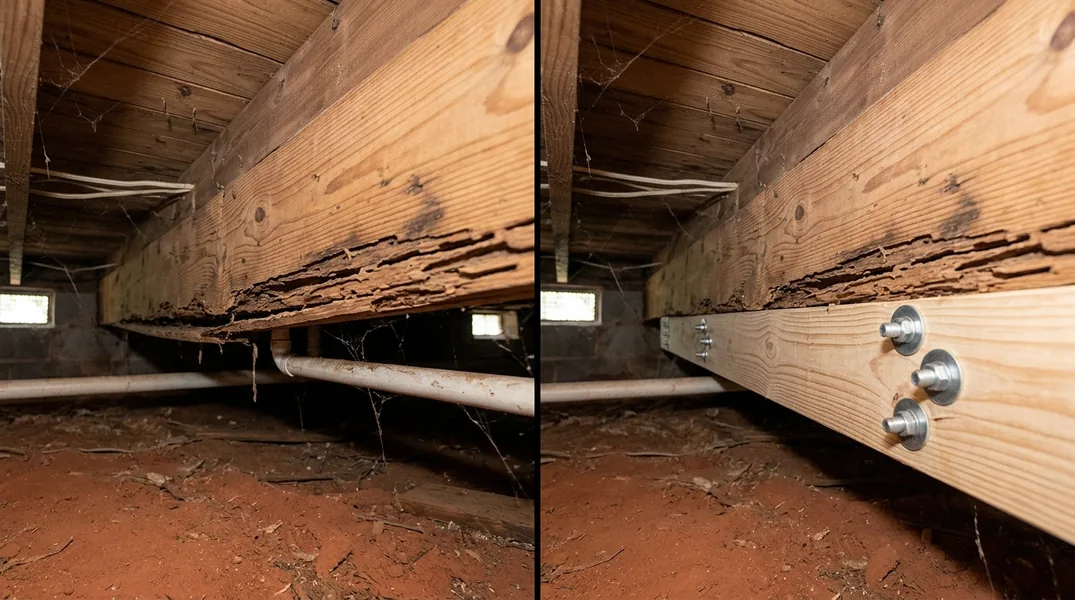
When floor joists are damaged by rot or have been weakened by age and moisture, repair typically involves one of several approaches. The most common and cost-effective method for moderately damaged joists is sistering. This technique involves fastening a new pressure-treated or solid wood member alongside the damaged joist, essentially doubling the structural capacity of that section of flooring. The new sister joist is bolted or lag-screwed to the existing joist at regular intervals, creating a composite beam that shares the load evenly.
Sistering floor joists works best when the damage is localized and the existing joist still has some structural integrity. However, if rot has consumed more than 30 percent of a joist's cross-section, full replacement may be necessary. Full replacement is more invasive and expensive, requiring temporary support posts while the damaged joist is removed and a new one is cut and installed to match the original dimensions and spacing. In cases where multiple joists are compromised or where the primary support beam has failed, Beam Replacement & Load-Bearing Wall Removal may be required. The scope of work depends entirely on a thorough inspection of the crawl space and an assessment of how much damage has occurred.
Sagging Floor Repair Cost in Raleigh: What to Budget
The pricing for sagging floor repair varies dramatically depending on the underlying cause and the extent of damage. A simple sistering job on one or two joists might cost between 1,500 and 3,500 dollars, while a more extensive repair involving multiple joists or beam replacement could easily exceed 10,000 dollars. Homes with severe foundation settlement or widespread wood rot may require even more substantial investment. The best way to get an accurate estimate is to have a professional inspect your specific situation.
Several factors influence the final cost. The accessibility of the damaged area matters greatly, as does the extent of rot or structural damage. If your crawl space is tight, damp, or cluttered, the work takes longer and costs more. The size of the joists and beams involved also affects labor and materials. Additionally, if moisture issues aren't addressed during the repair, the problem will likely recur, making it essential to fix drainage and ventilation problems as part of any comprehensive solution. Don't let sticker shock prevent you from getting professional help. Ignoring a sagging floor doesn't make it go away, it only gives the underlying damage more time to spread. Reach out to Raleigh Carpentry at (984) 254-7340 to discuss your situation and get a free estimate.
Preventing Future Floor Sagging: Moisture Control and Maintenance
Once your sagging floor has been repaired, the best investment you can make is preventing the problem from happening again. Moisture control is paramount. Ensure your gutters and downspouts direct water at least four to six feet away from your home's foundation. Grade the soil around your house so water slopes away naturally. If you have a crawl space, install proper ventilation or consider encapsulation with a vapor barrier to control humidity. Keep your crawl space clean and free of debris, and have it inspected annually for signs of moisture, rot, or pest damage.
Regular maintenance of your home's structural components will catch problems early. Every few years, inspect your crawl space yourself or hire a professional to do so. Look for soft spots in wood, discoloration that suggests moisture damage, or visible rot. Check that support posts are sitting firmly on their footings and aren't tilted or leaning. If you notice any changes in your floor's levelness or new cracks in your walls, don't wait to investigate. Early detection of wood rot or structural movement can save you thousands in repair costs down the road. When you're ready to address sagging floors or want a preventive inspection, Raleigh Carpentry is here to help with expert diagnosis and durable repairs.
Looking for a professional carpentry contractor in Raleigh? Raleigh Carpentry responds fast for all your carpentry needs.
Get a Free QuoteOur services: Wood Rot & Dry Rot Repair · Termite Damage Repair · Floor Joist & Subfloor Repair