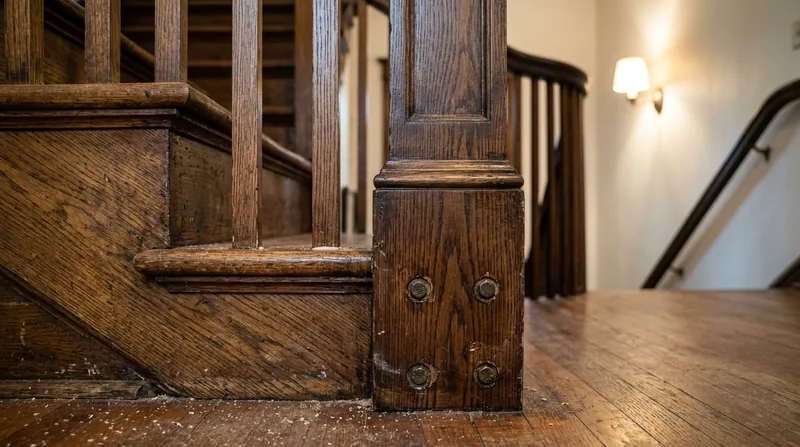




Raleigh's historic neighborhoods, from the Victorian homes of Oakwood to the Craftsman bungalows of Boylan Heights and Cameron Park, climb their stairs every day. Many of those staircases are original, built over a century ago with hand-cut stringers and mortised balusters. Others have settled and shifted with the red clay soil beneath them, developed squeaks and loose treads, or show the wear of decades of foot traffic. Stair and railing repair in Raleigh means understanding both the carpentry and the history. We repair and rebuild the stringers that support your steps, restore period railings to their original detail, and install code-compliant handrails and attic ladders. Whether your stairs are original wood or have been altered over the years, we work from what's there and propose repair before replacement whenever the wood justifies it.
Why Stair and Railing Repair Matters in Historic Raleigh Homes
Raleigh's climate and soil create real stresses on wooden stairs. The humid subtropical summers and seasonal freeze-thaw cycles cause wood movement. Red clay swells when wet and shrinks when dry, shifting the house frame and the stringers attached to it. Treads cup and crack, balusters loosen, and newel posts develop play at the base. A staircase that feels unstable is not just a comfort issue, it is a safety issue that compounds over time.
- We inspect stringers for soft wood, splits along the grain, and structural compromise from moisture or past termite activity.
- We tighten loose balusters by re-wedging tenons, replacing worn joints, and reinforcing newel posts without removing the entire railing.
- We repair squeaky treads by securing them to stringers from below, eliminating movement without visible fasteners.
- We replace individual treads or entire stair runs when wood is too far gone, matching the original profile and finish.
- We install modern handrails and code-compliant railings that meet current building standards while respecting period architecture.
A safe staircase is built on solid stringers and tight joinery. Raleigh's older homes deserve repairs that address the root cause, not cosmetic patches.
Key info: Raleigh's humid climate and seasonal soil movement cause wood stairs to shift and settle. A staircase that shifts more than a quarter-inch at the rail or develops hollow sounds under foot needs professional inspection. Loose balusters are a fall risk, especially for children and older adults. We repair the root cause, whether that is a split stringer, a loose newel post, or moisture-driven movement.
For more on wood movement and moisture-related damage, see our wood rot and dry rot repair service.
How We Repair and Rebuild Stairs: Our Process in Raleigh
Every staircase is different. Some need only re-wedging and tightening. Others have rotted stringers or treads that must be replaced. We start by understanding what is wrong, why it happened, and what the staircase needs to be safe and functional again. We document the original profile, species, and finish, then repair or replace in kind.
- We perform a detailed inspection of stringers, treads, risers, balusters, newel posts, and fasteners to identify loose, cracked, or soft wood.
- We probe suspected rot with a sharp tool and measure wood moisture to confirm whether damage is active or historic.
- We remove treads and balusters only as needed, working in stages to minimize disruption to your home.
- We repair balusters by re-gluing and re-wedging mortise-and-tenon joints, or replace individual balusters if wood is damaged.
- We reinforce or sister stringers when they have lost strength, or replace them entirely when replacement is the only honest answer.
- We install handrails and guardrails to current building code, securing them to stringers or walls with mechanical fasteners that hold under load.
The goal is a staircase that is safe, solid underfoot, and looks like it belongs in your home.
Local example: A Hayes Barton Colonial Revival had original oak stringers and ash balusters. The stringers had developed soft spots from a roof leak, and the balusters were loose at the base. We reinforced the stringers by sistering new oak alongside them, re-mortised and re-wedged all balusters, and restored the newel posts. The staircase is now solid and looks original. The whole job took five days on site.
See our structural carpentry service for more on stringer reinforcement and load-bearing repairs.
Stair Repair Methods and When to Use Each
| Approach | Description | Best for |
|---|---|---|
| Wedging and Tightening | Re-drive and re-glue loose balusters, tighten newel posts, and secure treads to stringers using traditional joinery and modern adhesives. | Loose or squeaky stairs with sound wood and good joinery. |
| Stringer Sistering | Glue and bolt new wood alongside a compromised stringer, restoring load-bearing capacity without removing the staircase. | Stringers with soft wood, splits, or moisture damage that still have structural integrity in part. |
| Tread or Baluster Replacement | Remove and replace individual treads, risers, or balusters, matching the original profile, species, and finish as closely as possible. | One or a few damaged or rotted components in an otherwise sound staircase. |
| Full Staircase Replacement | Remove and rebuild the entire staircase, including stringers, treads, balusters, and newel posts, to original specifications or updated code. | Extensive rot, multiple failures, or structural compromise across the entire run. |
| Handrail and Code Compliance | Install or upgrade handrails, guardrails, and balusters to meet current building code for graspability, height, spacing, and load capacity. | Stairs that lack proper handrails or have period railings that do not meet modern safety standards. |
Stair and Railing Repair Cost in Raleigh: What to Expect
Stair and railing repair in Raleigh starts at around $600 for minor tightening and wedging work on a few loose balusters or squeaky treads. A full baluster replacement or tread repair typically runs $1,200 to $2,500, depending on the number of components, the species of wood, and the finish work needed to match the original. Stringer reinforcement or replacement can range from $2,500 to $6,000 or more, depending on the length of the staircase, the extent of damage, and whether the work requires temporary support during repair.
Several factors affect the final cost. The length and complexity of the staircase, the species of wood (original oak or ash costs more to match than pine), the extent of rot or damage, whether you need new handrails or code-compliance upgrades, and the accessibility of the stairs all play a role. A staircase in a tight corner of a 1920s bungalow takes longer to work on than one in an open entry hall. If the wood is original and you want to preserve it, repair costs more than replacement. If the wood is too far gone, replacement is the honest answer and often the better value.
We recommend getting two or three estimates before deciding. Each carpenter will assess the damage differently and may propose different solutions. A detailed written estimate should spell out exactly what is being repaired or replaced, what materials will be used, how long the work will take, and what the final cost will be. See our pricing overview for more detail on individual repair types.
Call us at (984) 254-7340 for a free estimate. We respond within 24 hours and will walk through your options in person.
What to Look for When Hiring a Carpenter for Stair and Railing Repair Near Raleigh
Hiring the right carpenter matters. Stairs are a safety-critical part of your home, and the work requires both structural understanding and craftsmanship. Look for a carpenter who is fully insured, has been in business locally for several years, and is willing to explain what is wrong and why. Ask for references from past staircase work, not just general carpentry. Request a detailed written estimate that breaks down labor, materials, and timeline. Check whether the carpenter is familiar with historic homes and can match original profiles and finishes.
- Verify that your contractor is fully insured and can provide a current certificate of insurance on request.
- Get at least two or three written estimates before committing, and compare what each one includes.
- Ask for references from at least two past staircase repairs, not general carpentry jobs, and call them.
- Understand whether a permit is required for your specific repair, and ask your contractor to clarify the permit process with your local building department.
- If your home is in a historic district or subject to HOA rules, confirm that the repair method and any handrail or railing changes comply with those guidelines.
A good carpenter will take time to understand your staircase, explain the damage plainly, and propose a solution that makes sense for your home and your budget. Contact us for a free estimate and a straightforward conversation about your stairs.
Stair & Railing Repair in Raleigh: Pricing Guide
| Service | Price | Details |
|---|---|---|
| Loose balusters or squeaky treads | Starting at $600 | Re-wedging, re-gluing joints, and securing treads to stringers without removal or replacement |
| Single tread or baluster replacement | Starting at $1,200 | Remove and replace one or a few components, matching original profile, species, and finish work |
| Stringer reinforcement or sistering | Starting at $2,500 | Glue and bolt new wood alongside a compromised stringer to restore load-bearing capacity without removal |
| Full staircase replacement or major rebuild | On estimate | Entire staircase removal and rebuild including stringers, treads, balusters, and newel posts requires on-site inspection |
| Handrail or code-compliance upgrade | Starting at $800 | Install or upgrade handrails and railings to meet current building code for safety and graspability |
| Free estimate | No obligation | Response within 24 hours at (984) 254-7340, includes detailed inspection and written proposal |
Indicative pricing, the exact cost depends on square footage, finish, and site access. Free personalized estimate within 24h at (984) 254-7340.


