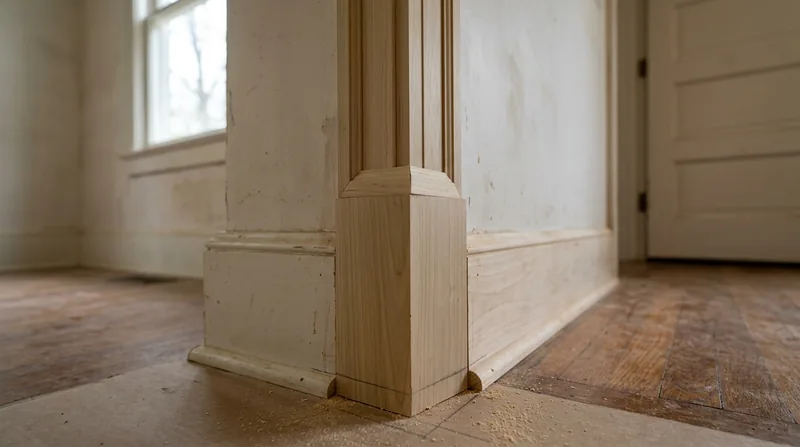




Raleigh's architectural heritage spans from Victorian mansions in Oakwood to Craftsman bungalows in Boylan Heights and brick-veneer subdivisions across North Hills. Each era demands its own finish carpentry approach. Finish & Trim Carpentry in Raleigh is not about speed or generic solutions. It's about tight miters, scribed joints that fit without gaps, and reveals that stay consistent across a room. Whether you're restoring crown molding in a 1920s home or installing custom casing in a newer build, the difference between handyman work and real carpentry shows in every detail. We handle casing, paneling, wainscoting, and custom trim throughout Raleigh homes, old and new, with the same crew that does the work and the knowledge to explain what you're paying for.
Why Finish & Trim Carpentry Matters in Historic and Modern Raleigh Homes
Finish carpentry is the visible craft that defines the interior and exterior character of a home. In Raleigh's older neighborhoods, original trim and molding often carry both aesthetic and historical value. In newer homes, finish carpentry sets the standard for quality and attention to detail. Poor trim work shows immediately: gaps at corners, inconsistent reveals, caulk that cracks within a season, and doors that don't hang square in their jambs. Good trim work is invisible because it fits.
- Casing around doors and windows requires precise measurement, square cuts, and coped joints that close tight without visible gaps or separation.
- Crown molding installation demands understanding of wall angles, ceiling slopes, and the math of miter cuts that look seamless at every corner.
- Baseboard and wainscoting must account for floor slope and wall irregularities common in Raleigh's older homes built on rolling Piedmont terrain.
- Custom paneling and built-in shelving require scribing to fit walls that are rarely perfectly plumb or square.
- Interior door installation and repair ensures doors swing freely, close properly, and align with the surrounding casing.
Each of these tasks separates a real finish carpenter from someone with a nail gun. Raleigh's mix of historic homes and newer construction means we see both the original trim standards of the 1920s and the expectations of modern homeowners. We meet both.
Key info: Historic homes in Oakwood and Hayes Barton often have original crown molding, picture rail, and baseboard that are wider and more detailed than modern trim. Restoring these elements requires understanding period proportions and sourcing wood that matches the original species and profile.
How We Approach Finish & Trim Carpentry in Raleigh: Precision from Measurement to Installation
Our process starts with understanding what the space needs and what the existing conditions allow. Raleigh homes sit on red clay soil that swells and contracts seasonally, and that movement affects walls, floors, and the fit of trim. We account for that. We measure multiple times, cut carefully, fit first, and finish last. Scribing, coping, and adjusting on-site are not extras. They are the standard.
- We measure wall angles, ceiling slopes, and floor heights at multiple points to account for variations that are normal in older Raleigh homes.
- We select and prepare material, matching species and grain direction where the job calls for stain or natural finish.
- We cut casing, molding, and trim to fit, using coped joints at inside corners and precise miters at outside corners.
- We scribe trim to fit walls and fixtures, filling gaps only where the wood cannot be adjusted further.
- We install and verify that all reveals are consistent, all joints close tight, and all doors and windows operate smoothly in their casings.
- We finish sand and prepare for paint or stain, or leave clear-coated wood ready for the homeowner's final choice.
This methodical approach takes longer than rough work, but it produces trim that will not separate, crack, or reveal gaps as the house settles.
Local example: A kitchen remodel in Boylan Heights required new crown molding that wrapped around an 11-foot cathedral ceiling with a slope of nearly 3 inches. We cut and fitted each piece on-site, using coped joints at the inside corners and adjusting the reveal to stay visually consistent despite the slope. The result was seamless trim that looks original to the home, not retrofitted.
Related work, like Crown Molding & Baseboard Installation, shares the same precision standards and often runs alongside finish carpentry projects.
Finish & Trim Carpentry Methods: Approaches and Best Applications
| Approach | Description | Best for |
|---|---|---|
| Coped Joints | Cutting one piece of molding to fit the profile of the adjacent piece, creating an interlocking joint that closes tight and accommodates seasonal movement. | Inside corners of crown molding, baseboard, and custom trim where a miter would be visible or prone to separation. |
| Scribing | Tracing the contour of an irregular wall or fixture onto the trim and cutting the trim to fit that exact shape, eliminating gaps and the need for caulk. | Trim around out-of-plumb walls, built-ins against sloped ceilings, and paneling in older Raleigh homes with uneven surfaces. |
| Miter Joints | Cutting two pieces at 45 degrees and joining them at a corner, creating a seamless appearance when the joint is tight and the pieces are square. | Outside corners of molding, picture rail, and decorative trim where the miter is part of the visual design and the wall is square and stable. |
| Butt Joints with Reveals | Joining trim pieces at right angles with a consistent reveal (setback) that frames the opening and creates visual balance. | Door and window casing where reveals frame the opening and simplicity and strength are priorities. |
| Custom Paneling | Installing tongue-and-groove, shiplap, or frame-and-panel wainscoting with precision spacing and scribed edges to fit irregular walls. | Wainscoting in dining rooms and bathrooms, accent walls, and restoration of original paneling in historic Raleigh homes. |
Each method is chosen based on the material, the wall condition, the visual effect desired, and the long-term durability needed in Raleigh's humid subtropical climate where seasonal moisture and temperature swings are real.
Finish & Trim Carpentry Cost in Raleigh: What to Expect
Finish carpentry pricing in Raleigh ranges widely based on the complexity of the work, the quality of the material, and the condition of the existing surfaces. A straightforward casing and baseboard installation in a new home runs differently than custom trim and scribing in a 100-year-old Victorian. We price from a site visit, not a phone call, because the real cost drivers are visible only in person.
Starting estimates for finish carpentry run from $550 for simple projects like casing a single door or installing baseboard in a small room. More involved work, like crown molding around multiple rooms, custom built-ins, or wainscoting, runs higher. Complex restoration work in historic homes, where material matching and period-correct detail matter, is priced on an estimate basis after we've assessed the scope.
The factors that move the cost are real: the linear footage of trim, the number of outside and inside corners (coped joints take longer than butt joints), the condition of the walls and ceilings (more scribing means more time), the species and quality of the wood, and whether the finish is paint or stain. Access also matters. A second-story bedroom takes more setup time than a ground-floor kitchen.
Getting 2 to 3 estimates is smart. You'll see variation in approach and price, and you'll understand what you're paying for. We recommend asking each carpenter how they handle inside corners, how they account for wall irregularities, and whether caulk is part of their standard or an extra.
Our detailed pricing guide covers common scenarios and the factors that affect the cost. Contact us for a free estimate and we'll walk through the specifics of your project.
What to Look for When Hiring a Finish & Trim Carpentry Contractor Near Raleigh
Hiring a carpenter for finish work is different from hiring one for framing or structural repair. Finish carpentry is visible, and the quality shows. Look for someone who explains their process, shows examples of previous work, and is willing to discuss the trade-offs between cost and quality. In Raleigh, where homes range from historic to contemporary, a good finish carpenter should be comfortable in both worlds.
Start with these practical checks: Verify that the contractor is fully insured and can provide proof. Ask for references from recent finish carpentry projects, not just general carpentry. Ask how they handle walls that are out of plumb or floors that slope. Ask whether they use coped joints or butt joints at inside corners, and why. A carpenter who explains the choice is thinking about durability, not just speed.
Get multiple estimates and compare not just the price but the scope. One estimate might include all caulking and finishing; another might not. Understand what's included. Ask about the timeline. Finish carpentry cannot be rushed without losing quality. A room of crown molding takes days, not hours, when it's done right.
If your project involves historic detail or period restoration, ask whether the contractor has experience in that area. Raleigh's Oakwood neighborhood and other historic districts have specific expectations for trim style and material. A contractor familiar with those standards will save you time and money.
When you're ready to move forward, contact us for a free estimate. We'll visit your home, assess the work, and give you a clear price and timeline. No obligation, no pressure.
Finish & Trim Carpentry in Raleigh: Pricing Guide
| Service | Price | Details |
|---|---|---|
| Door and Window Casing | Starting at $550 | Single opening with standard reveals, butt joints, and paint-grade wood, including finish sand and preparation |
| Crown Molding Installation | Starting at $850 | Per room with coped inside corners, precise reveals, and caulking, price varies by room size and ceiling slope |
| Baseboard and Wainscoting | Starting at $600 | Linear foot pricing for baseboard installation with returns and inside corner treatment, scribing to fit uneven walls included |
| Custom Built-Ins and Paneling | On estimate | Scope and material complexity require on-site measurement, design consultation, and detailed quote before work begins |
| Estimate and Travel | Free | No charge for site visit and estimate in Raleigh and surrounding areas, response within 24 hours at (984) 254-7340 |
Indicative pricing, the exact cost depends on square footage, finish, and site access. Free personalized estimate within 24h at (984) 254-7340.


