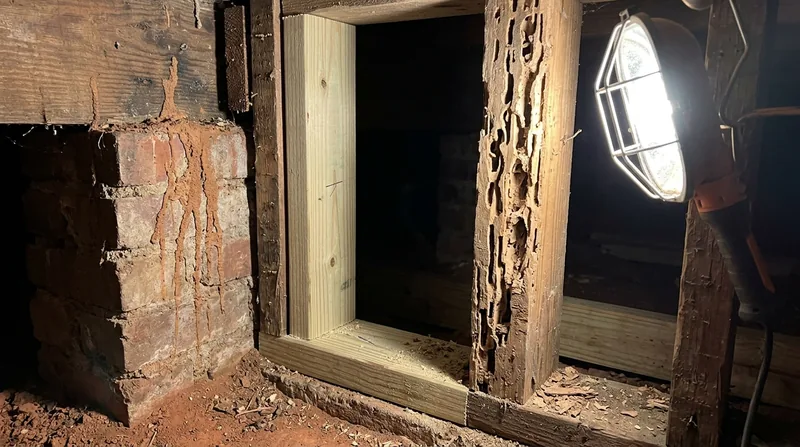




Termite Damage Repair in Raleigh means replacing wood that termites have hollowed out, restoring the structural integrity that the exterminator's treatment cannot touch. Raleigh's humid Piedmont summers and mild winters keep termite pressure high most of the year, particularly in the Victorian homes of Oakwood, the Craftsman bungalows of Boylan Heights and Cameron Park, and the older mill cottages scattered through Method and surrounding neighborhoods. After your pest inspector identifies damage, the wood stays compromised until a carpenter removes and replaces the affected studs, sill plates, floor joists, subfloor sections, and trim. We work from your pest inspection report, replacing termite-eaten wood with sound material and restoring full structural integrity so your home stands solid again. Call (984) 254-7340 for a free estimate, or read on to understand what termite damage looks like and what repair costs in Raleigh.
Why Termite Damage Repair Matters in Raleigh's Historic and Newer Homes
Raleigh termites work year-round in our warm, humid climate, feeding on the cellulose in wood framing, sill plates, floor joists, and exterior trim. Unlike wood rot, which spreads slowly and announces itself with soft spots and discoloration, termite damage often hides inside walls and under floors until the wood loses load-bearing strength. A pest treatment kills the insects but leaves the damage behind. The wood must be removed and replaced to restore the home's structural safety and prevent further settlement or movement.
- We remove termite-damaged studs, sill plates, and rim joists that no longer carry their design load safely.
- We replace compromised floor joists and subfloor sections to eliminate sagging, squeaking, and soft spots underfoot.
- We cut out and sister in new wood alongside damaged exterior trim and fascia rather than replacing entire boards when the sound wood justifies repair.
- We document the scope of work and final condition so you have a clear record for insurance claims or future sale disclosures.
Addressing termite damage promptly prevents secondary problems like sagging floors, cracked drywall, and misaligned doors and windows that develop as the home settles unevenly.
Local reality: Raleigh's red clay soil, rolling Piedmont terrain, and mature oak and tulip poplar trees create ideal conditions for subterranean termite colonies. Homes in Raleigh, Cary, Durham, and Chapel Hill face consistent pressure from spring through fall and sporadic activity in winter. Early detection and prompt wood replacement are the most cost-effective response.
For more on wood damage and repair philosophy, see our Wood Rot and Dry Rot Repair page, which covers similar structural carpentry principles.
How We Repair Termite Damage: Step-by-Step Process in Raleigh
Our process starts with your pest inspection report, which identifies the location and extent of damage. We assess which wood can be repaired by sistering (adding new lumber alongside sound framing) and which must be fully removed and replaced. We work methodically to restore the home's structural integrity without over-building or creating unnecessary waste.
- We examine the damaged framing in person to confirm the pest inspector's findings and scope the repair accurately.
- We remove termite-eaten wood sections using hand and power tools, exposing the full extent of the damage so nothing is hidden.
- We replace studs, sill plates, floor joists, and subfloor in kind, using pressure-treated lumber where ground contact or moisture exposure requires it.
- We reinstall trim, casing, and fascia, matching the original profile and finish so the repair is invisible to the eye.
- We photograph and document the work so you have evidence of the repair for insurance, warranty, or disclosure purposes.
The entire process respects the home's original construction and keeps disruption to adjacent finishes and systems to a minimum.
Real example: A Boylan Heights bungalow showed termite damage in the main-floor rim joist and one floor joist. We removed the damaged sections, replaced them with pressure-treated lumber, and reinstalled the subfloor and finished flooring. The job took two days, cost under $2,800, and the floor is now solid and level again.
For more on structural carpentry and floor repair, visit our Floor Joist and Subfloor Repair service page.
Termite Damage Repair Methods and Materials
| Approach | Description | Best for |
|---|---|---|
| Sistering | Adding new lumber alongside partially damaged framing, bolted or nailed together to share the load. | Floor joists and studs where the sound wood can still carry load and the damage is localized. |
| Full Removal and Replacement | Cutting out the entire damaged member and installing new lumber of the same dimension and grade. | Sill plates, rim joists, header beams, and studs where damage is extensive or load-bearing capacity is compromised. |
| Pressure-Treated Lumber | Replacement wood chemically treated to resist rot and termite attack, used where moisture or ground contact is present. | Sill plates, rim joists, and any framing within 12 inches of the soil or subject to splash-back from rain. |
| Trim and Fascia Repair | Cutting out damaged exterior trim, soffit, and fascia and splicing in new material or rebuilding sections to match the original. | Exposed exterior wood where termite damage is shallow and the structural framing behind is sound. |
Termite Damage Repair Cost in Raleigh: What to Expect
Termite damage repair cost in Raleigh starts at $1,200 for small, localized repairs such as a single damaged stud or a short run of compromised trim. The price rises with the scope of damage, the number of members that need replacement, and the difficulty of access. A full rim joist replacement or multiple floor joists typically runs $2,500 to $4,500. Complex jobs involving structural beams or extensive subfloor replacement may exceed $5,000 and require an on-site estimate.
Factors that affect your final cost include the location and accessibility of the damage (crawlspace work costs more than above-grade work), the number and size of framing members involved, whether pressure-treated lumber is necessary, and the need to match or restore finish surfaces. Getting two or three estimates from local carpenters ensures you understand the scope and have competitive pricing.
See our full pricing page for detailed breakdowns by repair type and size, or call (984) 254-7340 for a free estimate tailored to your home and damage report.
Hiring a Termite Damage Repair Carpenter Near Me: What Raleigh Homeowners Should Know
When you are looking for a termite damage repair carpenter near Raleigh, focus on carpenters who understand structural integrity and have a track record of honest assessment. A good carpenter will explain what must be replaced and what can be repaired, never pushing you toward unnecessary full replacement. Ask for references from recent jobs, confirm that the contractor is fully insured, and request a written estimate that breaks down materials, labor, and timeline.
- Verify that the contractor is fully insured and ask for a certificate of insurance naming you as an additional insured.
- Request at least two references from Raleigh or nearby homeowners for whom the contractor has completed termite or structural repairs.
- Ask whether the contractor has experience with your home's age and style, from Victorian to Craftsman to modern brick subdivisions.
- Confirm that the contractor understands local building code requirements and will obtain permits if structural work crosses the permit threshold in your jurisdiction.
- Get the estimate in writing with a clear scope, materials list, and timeline so there are no surprises once work begins.
Contact us at Raleigh Carpentry to schedule your free estimate and discuss your termite damage in detail.
Termite Damage Repair in Raleigh: Pricing Guide
| Service | Price | Details |
|---|---|---|
| Small localized repair (single stud, short trim run) | Starting at $1,200 | One to two members replaced, no structural complexity, minimal finish work required |
| Moderate repair (multiple studs, rim joist section, floor joist) | Starting at $2,500 | Three to five members, possible subfloor work, finish restoration, pressure-treated lumber where needed |
| Large structural repair (full rim joist, multiple joists, beam involvement) | Starting at $4,000 | Extensive crawlspace access, multiple framing members, pressure-treated lumber, possible temporary support required |
| Complex or extensive termite damage requiring structural assessment | On estimate | Full scope review on site needed before pricing, may involve permit requirements and engineered assessment |
| Travel and estimate | Free | No charge for site visit and written estimate in Raleigh and surrounding service areas |
Indicative pricing, the exact cost depends on square footage, finish, and site access. Free personalized estimate within 24h at (984) 254-7340.


